
Corset Back vs Zip-Up Back: Which Suits a Curvy Silhouette?

Most brides don't think about the back of their dress until they're standing in the fitting room, arms up, waiting to see what happens when the stylist pulls it closed. That moment matters more for brides than the style guides tend to admit. The closure at the back of a wedding dress doesn't just hold it shut; it decides how much room you have to work with on the day and how forgiving the dress will be if your measurements shift between ordering and your wedding.

What a zip-up wedding dresss offers you
A zip-up back dress is fixed. The zip runs to a set length, and the dress is cut to that size. If it fits at your final fitting, it will fit on the day, but only within a narrow window either side of that measurement, usually an inch or two at most.
That's fine for a bride whose weight and shape are stable in the months before the wedding. It's a harder bet if you're planning to lose weight, if your body tends to fluctuate with stress or your cycle, or if your wedding is more than six months away, as a lot can change in that time. A handful of wedding dress designers offer styles with both a zip and a separate lace-up section for extra security, but that's a specific style choice rather than something you can expect on any zip-back gown, so don't count on it unless you've seen it on the dress in front of you.
Zip up backs tend to sit flatter and smoother against the body, which is part of why they're popular for sleek, fitted silhouettes. Less bulk at the closure means a cleaner line down the spine, particularly in structured satin or crepe. The other benefit is obviously also their ease of use on the day compared to lacing up a traditional-style wedding dress, which will require one of your bridal party to take a quick lesson in from your chosen bridal shop before the big day.
What are the benefits of a corset-back wedding dress?
Corset back lace is usually ribbon threaded through eyelets down a hidden panel. Because it's adjustable, it typically flexes by around one to two inches, sometimes a little more depending on the wedding dress. That's still a real buffer and typically enough to cover a stressful final fortnight of wedding admin, a change in your body over the months of planning, or simply the difference between how you feel first thing in the morning and after the wedding breakfast.
The adjustability of a corset back also changes how the wedding dress is fitted to begin with. Rather than needing to match an exact size, a corset back lets your stylist tighten or loosen the lacing to shape the waist and smooth the back at the actual fitting, which tends to give a more tailored-looking result for those with fuller busts, a defined waist, or a curvier hip-to-waist ratio. It's part of why corset backs are so common in structured ballgowns and fit-and-flare styles, the shapes that rely on the bodice holding its form.
The trade-off is texture. A laced back has visible ridges and a bit of bulk under the ribbon, which shows more in clingy or very lightweight fabrics. It's rarely an issue in structured satin or fuller skirts, where the eye is drawn elsewhere.

Which suits a curvy figure better, a lace-up corset back or a zip-up back?
There's no single right answer, but a few things tend to hold true.
If you're choosing a structured silhouette, a ballgown, an A-line, or a fit-and-flare with boning in the bodice, a corset back usually makes more sense. Those styles are built around the waist, holding a specific shape, and the lacing gives you and your stylist room to sculpt that shape precisely, rather than hoping the size you ordered lines up exactly with your body on the day.
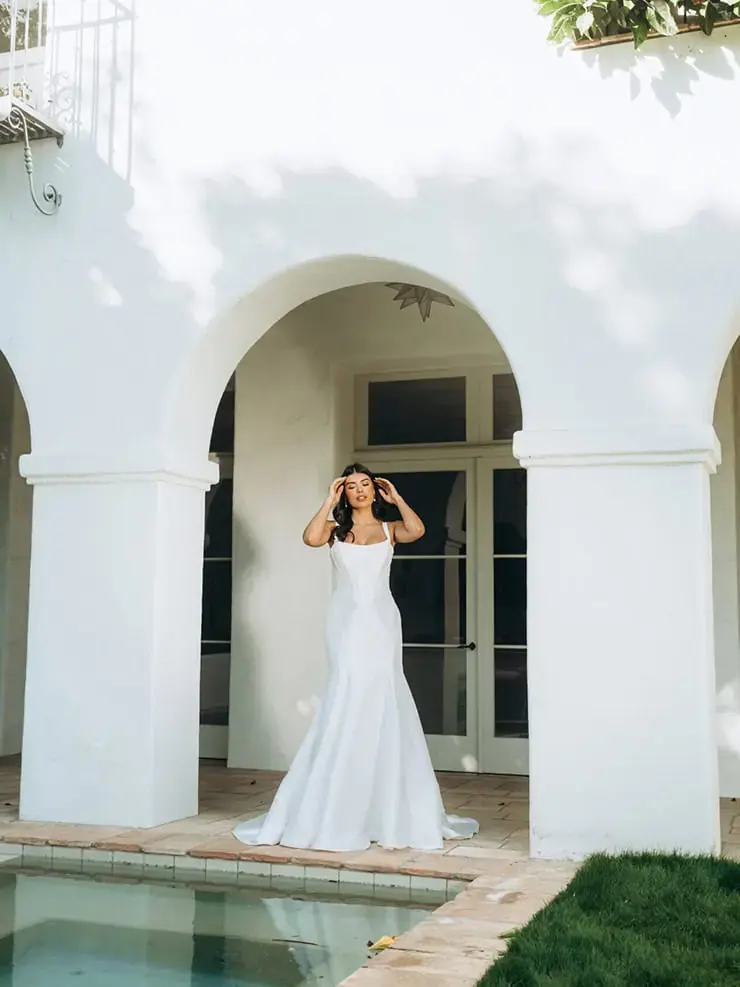
If you're set on something sleeker, like a fitted mermaid or a softer slip-style dress, a zip can still work well. Just ask your stylist about the finished measurements versus your current ones and how much room there is to alter it either way before the wedding. A little breathing room in an otherwise fitted dress makes a real difference to how the day actually feels, especially once you've been standing, dancing, and eating for several hours.
Comfort matters just as much as the silhouette. A corset back that's been laced correctly shouldn't dig in or restrict your breathing, and if it does, that's a fitting issue, not something to just live with. Speak up in the fitting room and ask for it to be adjusted.
Try both wedding dress styles during your appointment
The easiest way to settle this for yourself is to try one of each in a style you like. The difference is much clearer on the body than it is on a hanger.
That's exactly what our private appointments are set up for. Each one runs for two hours, with a dedicated stylist working with you rather than moving between brides, so there's time to try a corset back and a zip back in the shapes you're drawn to and actually compare how each one feels once it's laced or zipped.
If you fall for a dress and want to see it again with a different closure or come back for a retry before you commit, that's part of the process too.
Book a first-look appointment online and bring the question with you. We'll help you work through it in the room.
FAQ
Is a corset back or zip back better for a plus-size wedding dress?
Neither is universally better, but corset backs tend to suit structured silhouettes like ballgowns and fit-and-flare styles, since the lacing allows the waist to be shaped precisely at each fitting and gives a bit of flexibility, usually a couple of inches, if your body changes before the wedding.
Can a corset back wedding dress feel too tight?
It shouldn't be. A well-fitted corset back should feel secure without restricting your breathing or digging into your skin. If it does, ask your stylist to adjust the lacing at your fitting rather than accepting discomfort.
Do zip-back wedding dresses have any adjustability?
Very little once the zip is sewn in, which is why an accurate final fitting matters more with this style. A seamstress can usually take a zip-back dress in or let it out by a small amount, so ask your stylist what's realistic for the dress you've chosen.


Comments